
In a world where technology moves at lightning speed, UHS hardware stands out as the unsung hero of performance and reliability. Imagine a superhero cape, but for your devices—UHS hardware swoops in to save the day, ensuring your gadgets run smoothly and efficiently. Whether it’s for gaming, photography, or just binge-watching the latest series, this hardware is designed to keep up with even the most demanding users.
Overview of UHS Hardware
UHS hardware stands for Ultra High Speed hardware, which plays a vital role in modern devices. This technology supports faster data transfer rates, significantly improving efficiency during data-intensive tasks. Users experience enhanced performance in sectors like gaming and photography, where speed directly impacts results.
UHS memory cards, like UHS-I and UHS-II, accommodate high-resolution video recording and rapid continuous shooting in cameras. UHS-I can reach speeds up to 104 MB/s, while UHS-II can achieve up to 312 MB/s. These advancements in read and write speeds support the requirements of advanced multimedia applications.
Performance optimization occurs during heavy multitasking. UHS hardware handles multiple data streams efficiently, allowing seamless transitions between applications. This capability caters to the demands of gamers and content creators who seek high-performance solutions.
Manufacturers frequently integrate UHS technology into various devices. Laptops, smartphones, and cameras increasingly utilize these hardware components to enhance user experience. By prioritizing UHS compatibility, users access greater storage capacity and faster processing speeds, enabling the execution of their tasks with minimal latency.
Investment in UHS hardware proves beneficial for professionals. It extends the longevity of devices, ensuring they remain relevant amid evolving technological standards. The demand for UHS-compliant products continues to rise, as this hardware meets the needs of users in an ever-changing digital landscape. As a result, understanding UHS hardware becomes essential for consumers seeking reliable and high-performance equipment.
Key Features of UHS Hardware
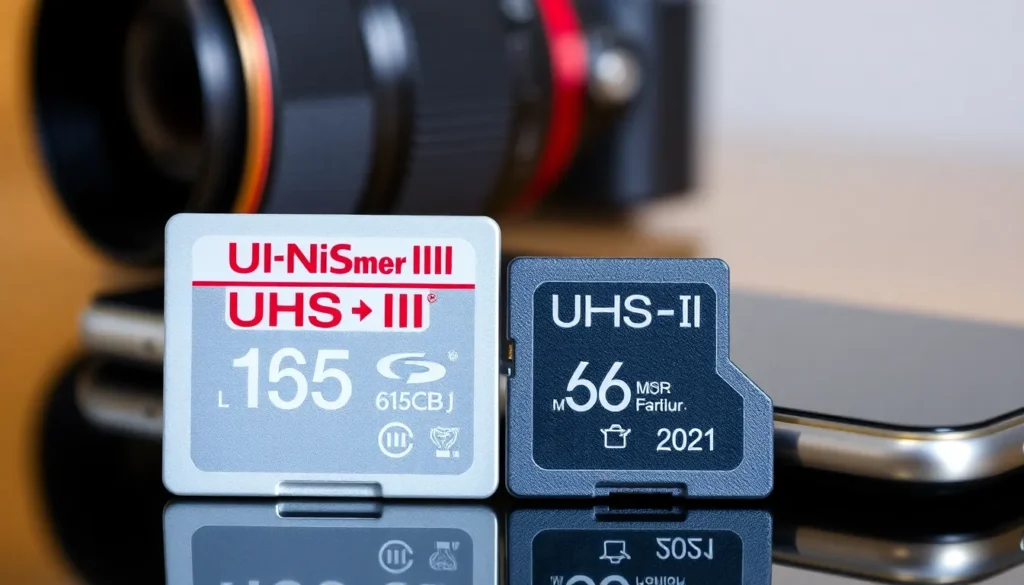
UHS hardware offers several key features that enhance device performance and user experience. Its capabilities span across speed, performance, and compatibility.
Speed and Performance
UHS hardware delivers exceptional speed and performance. UHS-I memory cards transfer data at speeds up to 104 MB/s. In contrast, UHS-II surpasses this with rates reaching 312 MB/s. Higher speeds facilitate smoother video recording and rapid continuous shooting, meeting the needs of professionals in photography and gaming. Enhanced performance during multitasking ensures seamless transitions across applications. Better speeds lead to reduced lag and faster load times, significantly benefiting gamers and content creators.
Compatibility with Devices
UHS hardware maintains broad compatibility with various devices. Smartphones, laptops, and cameras increasingly integrate UHS technology, allowing wider access to its benefits. Users enjoy the ability to interchange memory cards across devices without sacrificing performance. This feature ensures that individuals can upgrade their storage solutions without being constrained by specific brands. Adopting UHS hardware not only enhances individual devices but supports a universal approach to high-performance technology. Understanding compatibility is vital for consumers prioritizing reliability and performance in their digital devices.
Types of UHS Hardware Available
UHS hardware comprises various types, each designed to meet specific performance needs and applications. Understanding these types helps users choose the right hardware for their devices.
UHS-I
UHS-I memory cards offer impressive speeds, reaching up to 104 MB/s. This type is suitable for casual photographers and gamers needing decent performance without overwhelming demands. UHS-I cards support Full HD video recording, making them popular for everyday use. They are compatible with a wide range of devices, allowing users to upgrade easily. Many smartphones and cameras feature UHS-I support, attracting everyday consumers who prioritize efficiency.
UHS-II
UHS-II hardware represents a significant advancement in speed and performance, achieving transfer rates of up to 312 MB/s. Professionals in photography and videography frequently favor UHS-II cards for their ability to capture high-resolution static images and 4K video seamlessly. Enhanced connectivity between card and device optimizes performance, which benefits users during rapid continuous shooting. Compatibility with UHS-I devices ensures that upgrading to UHS-II remains feasible for existing setups. Many high-end cameras and laptops now integrate UHS-II technology, attracting serious content creators looking to enhance their workflows.
UHS-III
UHS-III memory cards push the envelope further, offering transfer speeds that reach an incredible 624 MB/s. This type caters to the most demanding users, such as those involved in 8K video recording and high-speed data transfers. UHS-III technology features backward compatibility, allowing effortless use in UHS-I and UHS-II devices. Advanced photographers and videographers benefit from the higher bandwidth, which supports larger file sizes and faster read/write processes. As more devices incorporate UHS-III support, the availability of this high-performance option continues to grow, making it essential for professionals aiming for cutting-edge performance.
Benefits of Using UHS Hardware
UHS hardware provides several advantages in today’s fast-paced technological landscape. Performance enhancements stand out as a primary benefit, especially during data-intensive tasks in gaming and photography. Speed directly influences outcomes in these fields, making UHS memory cards a vital choice for users.
High transfer rates are another significant advantage. For instance, UHS-I cards reach speeds up to 104 MB/s, while UHS-II cards can achieve up to 312 MB/s. Such capabilities facilitate smoother video recording and rapid continuous shooting, catering to professionals in photography and gaming.
Efficiency during multitasking is a strong point for UHS hardware. Devices equipped with UHS technology can handle multiple data streams seamlessly. This feature enhances the user experience, allowing smooth transitions between demanding applications for gamers and content creators.
Broad compatibility reinforces the appeal of UHS memory cards. Users can interchange memory cards across various devices without sacrificing performance. This universal approach ensures that UHS hardware meets the diverse needs of consumers seeking reliable and efficient digital solutions.
Investing in UHS hardware extends the longevity of devices as well. With evolving technological standards, these products ensure that devices remain relevant and capable of handling future demands. Understanding UHS-compliant products becomes essential in an ever-changing digital landscape.
Specific types of UHS hardware cater to varied performance needs. UHS-I cards suit casual users with Full HD capabilities, while UHS-II cards serve professionals focused on 4K video and high-resolution imaging. UHS-III cards reach speeds up to 624 MB/s, designed for the most demanding tasks like 8K video recording. Each type provides tailored solutions to match user workflows and device requirements.
UHS hardware stands as a critical element in enhancing the performance of modern devices. Its ability to support high transfer speeds makes it indispensable for users engaged in gaming, photography, and streaming. With options like UHS-I, UHS-II, and UHS-III, there’s a solution tailored to meet the needs of every user, from casual to professional.
As technology continues to evolve, the importance of UHS hardware will only grow. Investing in these high-speed memory cards not only boosts device performance but also ensures compatibility across various platforms. For anyone looking to optimize their digital experience, understanding and utilizing UHS technology is key to staying ahead in today’s fast-paced tech landscape.

